How Financial Advisors Can Build a Tax Planning Service That Attracts Clients and Drives Growth
Why Comprehensive Tax Planning is One of the Strongest Differentiators for Financial Advisors
For years, tax planning has been viewed as an “extra” service offered by a handful of advisors, or as something reserved for a firm’s wealthiest clients.
But today’s clients expect more than investment management and annual reviews. They want advice that improves their financial lives now, not just over the coming decades. That’s where tax planning helps advisors stand apart.
Each and every one of your clients pays taxes. They all want to keep more of what they earn. And they appreciate an advisor who can proactively identify opportunities instead of simply reacting to last year’s return.
The most successful firms aren’t necessarily the ones offering the most sophisticated tax strategies. They’re the ones that have made tax planning a consistent, repeatable part of the client experience.
If you haven’t yet done that at your firm, don’t worry. Building a successful tax planning service doesn’t require reinventing your practice overnight. It starts with a series of intentional, manageable steps that eventually become part of your firm’s identity.
Most Firms are Already Doing Tax Planning—Just Not Consistently
If you ask advisors whether they discuss taxes with clients, most will answer yes. But there’s an important distinction between answering tax questions and delivering comprehensive tax planning.
Many firms fall somewhere along this scale (from low to high proficiency):
Where does your firm fall on the scale?
- Reactive: Occasional tax planning conversations when clients bring up a concern
- Selective: More structured planning for high-net-worth clients
- Consistent: A repeatable process offered to every client, every year
The challenge is not falling into the trap of treating tax planning solely as a reactive exercise. Many advisors respond to tax issues after they appear rather than identifying opportunities before the tax year ends. Meanwhile, taxes continue to rank among the biggest financial frustrations clients face—regardless of their income or stage of life.
That represents a tremendous opportunity for advisors willing to make tax planning a core component of their value proposition.
RELATED: How To Build a Tax Planning Service That Attracts Clients and Drives Growth
Define What Tax Planning Means in Your Practice
One of the biggest obstacles advisors face is trying to make tax planning feel like an entirely new service.
You don’t have to take that approach. Instead, think of it as expanding the planning conversations you’re already having.
For many firms, comprehensive tax planning means:
- Reviewing tax returns annually
- Identifying planning opportunities before year-end
- Coordinating with a client’s CPA
- Explaining the tax implications of financial decisions
- Helping clients understand how today’s choices affect tomorrow’s tax bill
Rather than layering an entirely new service onto their business, successful firms weave tax planning into existing review meetings and planning workflows. That shift alone can dramatically improve consistency.
Move From Reactive to Proactive
Making tax planning part of the client experience starts with repeatability.
Instead of waiting for clients to ask tax questions, create a process where every review includes a tax conversation. The process doesn’t need to be complicated.
A Simple, Repeatable Review Process
- Collect tax returns before annual reviews
- Review the return using a standardized process
- Identify opportunities worth discussing
- Prioritize the recommendations
- Coordinate implementation with the client’s tax professional when appropriate
When advisors approach every client the same way, tax planning becomes a habit rather than an exception. Consistency also makes it much easier to expand the service across an entire firm.
Build a Process That Can Scale
One reason many firms hesitate to expand tax planning is the fear that it will consume too much time.
It’s an understandable concern. If every analysis requires hours of manual calculations, growth quickly becomes unsustainable. Scalable tax planning depends on systems.
The right workflow should produce consistent outputs regardless of which advisor performs the review. It should handle complex tax situations without creating unnecessary friction and provide calculations advisors can confidently discuss with clients.
Technology plays an important role here.
Purpose-built tax planning software can automate much of the analysis, allowing advisors to spend less time calculating and more time explaining recommendations and strengthening client relationships. Rather than replacing professional judgment, technology helps standardize the work so advisors can focus on higher-value conversations. It can also identify comprehensive planning opportunities that might otherwise be missed.
Every Client Has Tax Planning Opportunities
Another misconception is that tax planning only benefits high-net-worth clients. In reality, nearly every client has opportunities worth discussing.
Young and Growing Families
- Education savings strategies
- Child tax credits
- Traditional versus Roth contribution decisions
- Health Savings Accounts
- Student loan planning
These conversations can help families improve cash flow while building long-term wealth.
Business Owners and High-Income Earners
- Entity structure optimization
- Qualified Business Income (QBI) deductions
- Solo 401(k)s
- SEP IRAs
- Backdoor Roth strategies
- Family payroll planning
- Donor-Advised Funds
Many of these decisions require coordination between advisors and tax professionals, making collaboration especially valuable.
Clients Near Retirement
- Roth conversion opportunities
- Social Security timing
- Required Minimum Distribution (RMD) planning
- Capital gains harvesting
- IRMAA management
The years immediately before retirement are often some of the most valuable for tax planning. These strategies can significantly affect lifetime tax liability.
Retirees
- Qualified Charitable Distributions (QCDs)
- RMD optimization
- Social Security coordination
- Survivor income planning
- Long-term care deduction strategies
Tax planning doesn’t stop once clients retire. For many retirees, these decisions directly influence retirement income sustainability.
Communicate Tax Planning in Terms Clients Understand
Clients rarely ask for tax planning because they often don’t know what’s possible. That makes advisor communication critically important.
Rather than describing technical strategies, successful advisors focus on outcomes.
For example, Instead of saying: “We’ll evaluate Roth conversion opportunities.”
Consider saying: “We’ll look for ways to reduce the taxes you pay over your lifetime.”
Clients don’t care about tax jargon. They care about questions like:
- Am I paying more taxes than necessary?
- Are there opportunities I’m missing?
- Are we looking ahead instead of backward?
Focus on your clients’ goals. Position tax planning as a review of their unique situation, the aim being to reduce how much they pay in taxes. You’ll build trust and deepen client relationships by demonstrating both immediate and long-term value.
And remember: when it comes to making complex planning more understandable, simple language builds trust.
Show the Value Before Clients Ask
Many advisors wait until a client raises a tax concern before they explore and explain planning opportunities. The most successful firms reverse that approach.
They proactively demonstrate value by bringing opportunities to clients first.
Imagine reviewing a tax return and saying:
“We’ve identified several opportunities to reduce your future taxes. Here’s what that would look like.”
That conversation immediately shifts the relationship. Instead of simply managing investments, you’re helping improve a client’s overall financial picture.
When clients experience those proactive conversations year after year, tax planning becomes one of the primary reasons they stay with your firm. And when you deliver significant savings by way of a proposed planning opportunity, a client tends to remember that forever.
And that leads to the next key point.
Tax Planning Creates Better Client Relationships
While reducing taxes is valuable, the biggest benefit may actually be stronger client relationships.
Clients who see advisors uncover meaningful planning opportunities often become:
- More engaged
- More responsive
- More likely to refer others
- More likely to consolidate assets
Why? Because tax planning demonstrates ongoing value beyond market performance.
Markets fluctuate, but tax opportunities persist every year. That translates to ongoing reasons to meet, communicate, and reinforce your expertise.
Turn Tax Planning Into a Growth Strategy
Tax planning isn’t just for existing clients, either. The benefits also function well as an effective business development tool.
Prospective clients often arrive with unanswered tax questions. Offering to review a tax return or discuss potential planning opportunities can create an immediate, meaningful conversation.
Instead of leading with portfolios or investment returns, tax planning-savvy advisors begin by addressing one of the most universal financial pain points. That’s a compelling differentiator.
As tax planning becomes part of your firm’s identity, it should also become visible throughout your marketing. Your website, content, webinars, newsletters, advertising, and client conversations should clearly communicate that comprehensive tax planning is part of your core services, not simply an occasional add-on.
Technology Makes Consistency Possible
Growth is good, but it also brings new challenges. Maintaining consistency is a good example.
Technology helps address that.
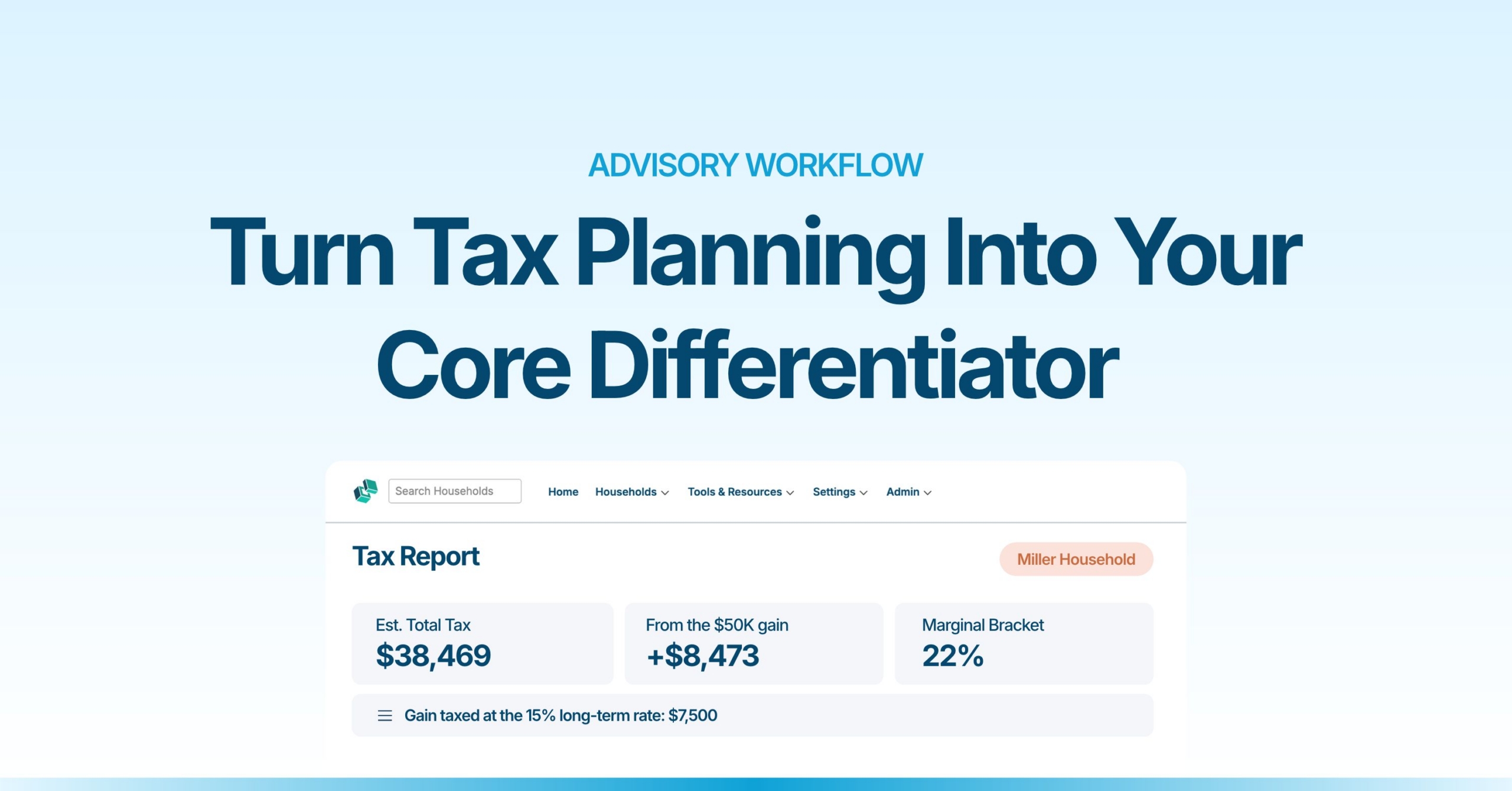
Solutions built specifically for tax planning can streamline return reviews, identify planning opportunities more efficiently, and generate reports that make conversations easier for clients to understand.
More than 10,000 firms use Holistiplan to do exactly that. The software integrates tax planning into a firm’s existing workflow, empowering advisors to deliver a more comprehensive and consistent tax planning experience across their client base—and without increasing staff workload.
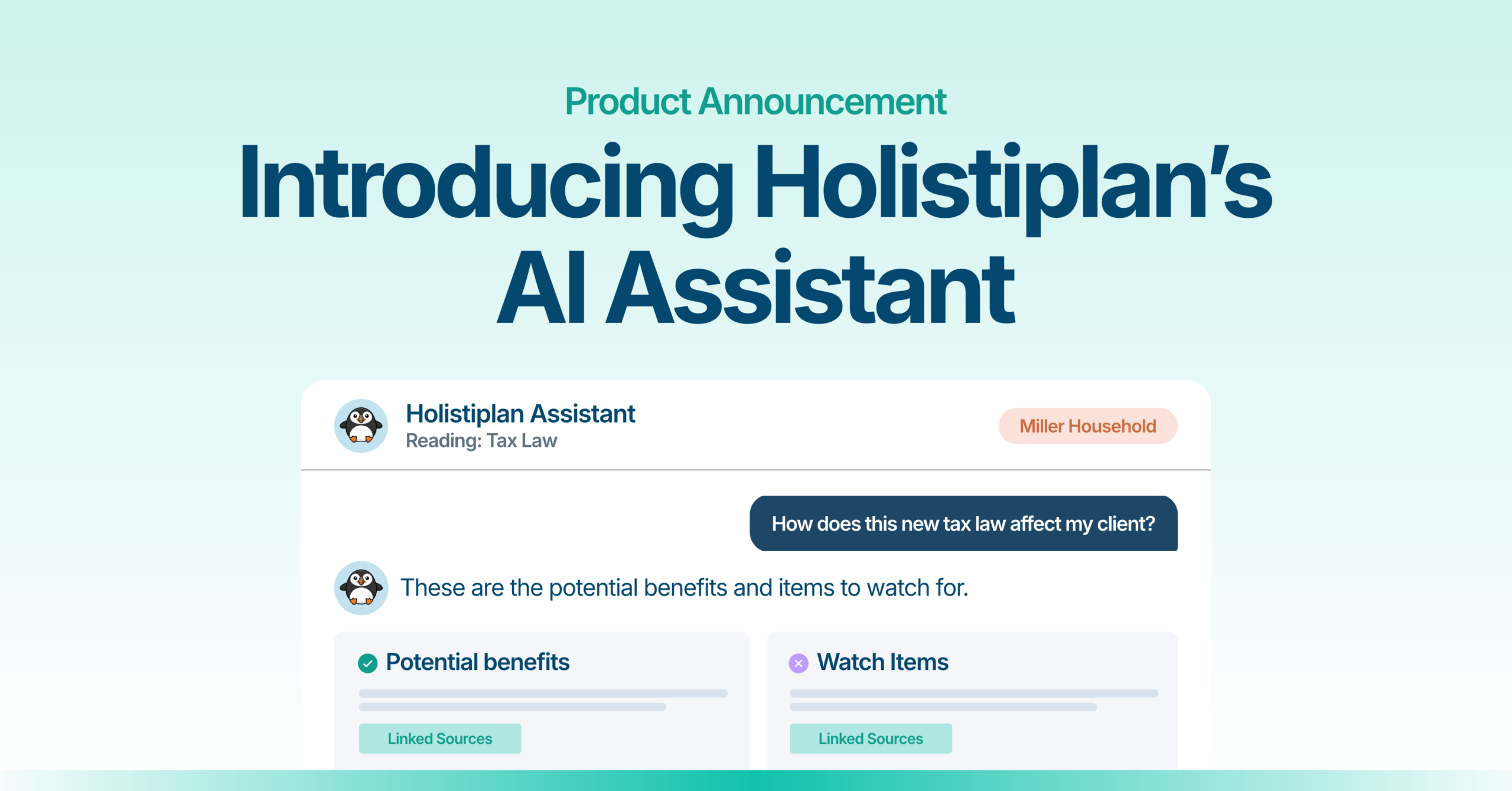
Holistiplan transforms client tax returns and IRS transcripts into actionable planning insights by automatically analyzing tax data, generating client-ready reports, modeling tax scenarios (including Roth conversions, capital gains, charitable giving, and retirement income strategies), visualizing tax impacts, and identifying opportunities to reduce lifetime tax liability while supporting more informed client conversations. The kind of thoroughness and consistency that Holistiplan affords is often what takes tax planning from an occasional service to a defining strength of a firm.
Start Small Then Build Momentum
Building a tax planning service at your firm doesn’t require an overnight transformation, nor can it be done that quickly.
Your First Four Steps
- Set a clear goal for where you want your firm to be on the tax planning scale one year from today.
- Identify three clients who aren’t currently receiving comprehensive tax planning and ask for their 2025 tax returns.
- Start a free seven-day trial of Holistiplan and upload a return to see just how quickly you can surface comprehensive planning opportunities for your clients.
- Review how tax planning is described across all of your firm’s collateral. Make sure it speaks to outcomes, not just services offered.
As financial advisory continues to rapidly evolve, one thing remains constant: the fact that clients want an advisor who helps them to make better decisions and keep more of their wealth. Comprehensive tax planning accomplishes both of those goals, and Holisitiplan is the tool to get your firm across that goal line. You’ll be better positioned to deliver meaningful insights that clients remember long after tax season ends.